
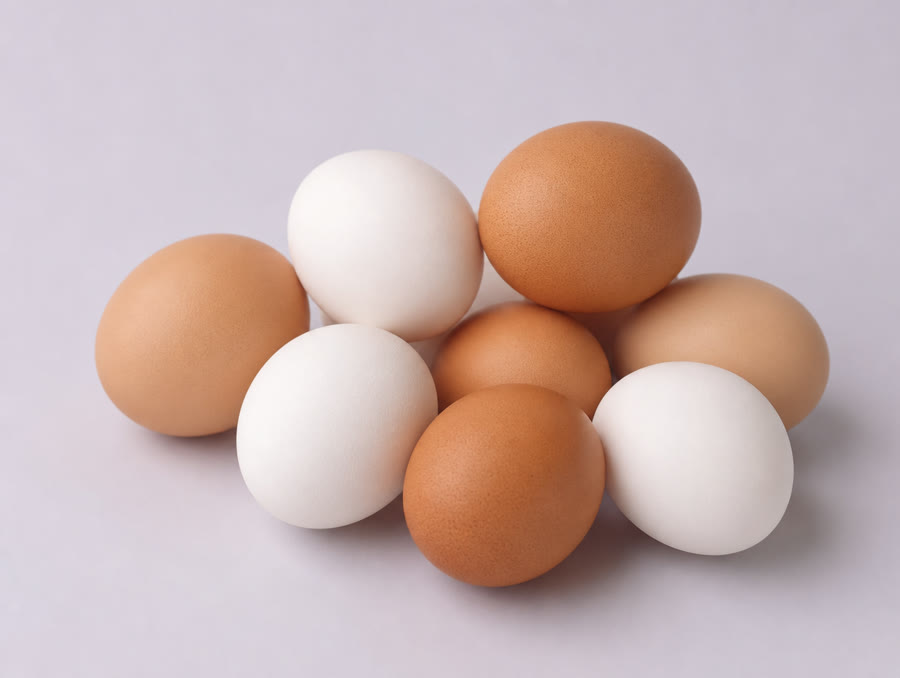
Eggs
- Product
- Table eggs
- Target
- Salmonella
- Result
- >6.7 log reduction
Shell egg guide
Washing works when it's done right: warm enough water, a sanitizing rinse and no soaking. The risks come when it isn't, and washing can damage the cuticle, which is why the EU doesn't allow Class A eggs to be washed. A waterless gas-phase treatment reduces Salmonella on the shell without water or added moisture. It only treats the outside of the egg, and whether it can stand in for washing depends on where you sell.
Side by side
| Washed (US and Canada) | Unwashed (EU Class A) | Waterless gas-phase | |
|---|---|---|---|
| What happens | Eggs are spray-washed, then spray-rinsed with a sanitizer. | Eggs are graded and packed without washing or cleaning. | Eggs roll through a chamber where hydroxyl radicals treat the whole shell. No water touches the egg. |
| Key rules | USDA-graded eggs: wash water at least 90°F and 20°F warmer than the eggs, then a 100–200 ppm chlorine (or equivalent) rinse. CFIA guidance: at least 11°C warmer than the eggs. | Class A eggs must not be washed or cleaned, before or after grading, except in countries that already allowed washing in 2003. | In many applications, treatment takes less than 30 seconds. |
| The cuticle | Washing can damage the cuticle, the egg's natural protective coating. | Left in place. | No impact on the cuticle layer. |
| Main risk | If the water is colder than the egg, Salmonella can be drawn inside. | Nothing reduces what's already on the shell. | It treats the shell only. Like any surface treatment, it can't reach Salmonella already inside the egg. |
| Water | Wash and rinse water to heat, treat and dispose of. | None. | None. |
| Shell reduction | More than 5 log on the shell under optimal washing conditions in a 2004 study. | None. | More than 6.7 log Salmonella on table eggs in a third-party study. |
Washing
Washing has a bad reputation in some circles, but the research is clear that it works when it's controlled. In a 2004 study in the Journal of Food Protection, washing under optimal conditions cut Salmonella on the shell by more than 5 log, with none found in the egg contents.
The same study showed what happens when it goes wrong. When the wash water was cooler, both Salmonella Enteritidis and Salmonella Typhimurium got into the egg contents. Extension specialists explain why: if the water is colder than the egg, the membranes inside contract and pull water in through the pores in the shell.
That's why the rules focus so heavily on temperature. Washing only helps if the water stays warmer than the eggs, all shift, every shift.
The cuticle
The EU took the opposite approach. Its marketing rules say Class A eggs shall not be washed or cleaned, before or after grading. The regulation explains why: washing can damage physical barriers like the cuticle, which may make it easier for bacteria to get through the shell and for the egg to lose moisture, especially if drying and storage aren't ideal.
Research backs up the concern. A 2014 study found that washed eggs had significantly damaged cuticles.
There's one exception. Countries that already allowed packing centres to wash eggs on 1 June 2003 can keep doing so under national guides, but those washed eggs can only be sold in that country.
Regulation
If you grade or sell in North America, these are the numbers that matter:
Waterless gas-phase
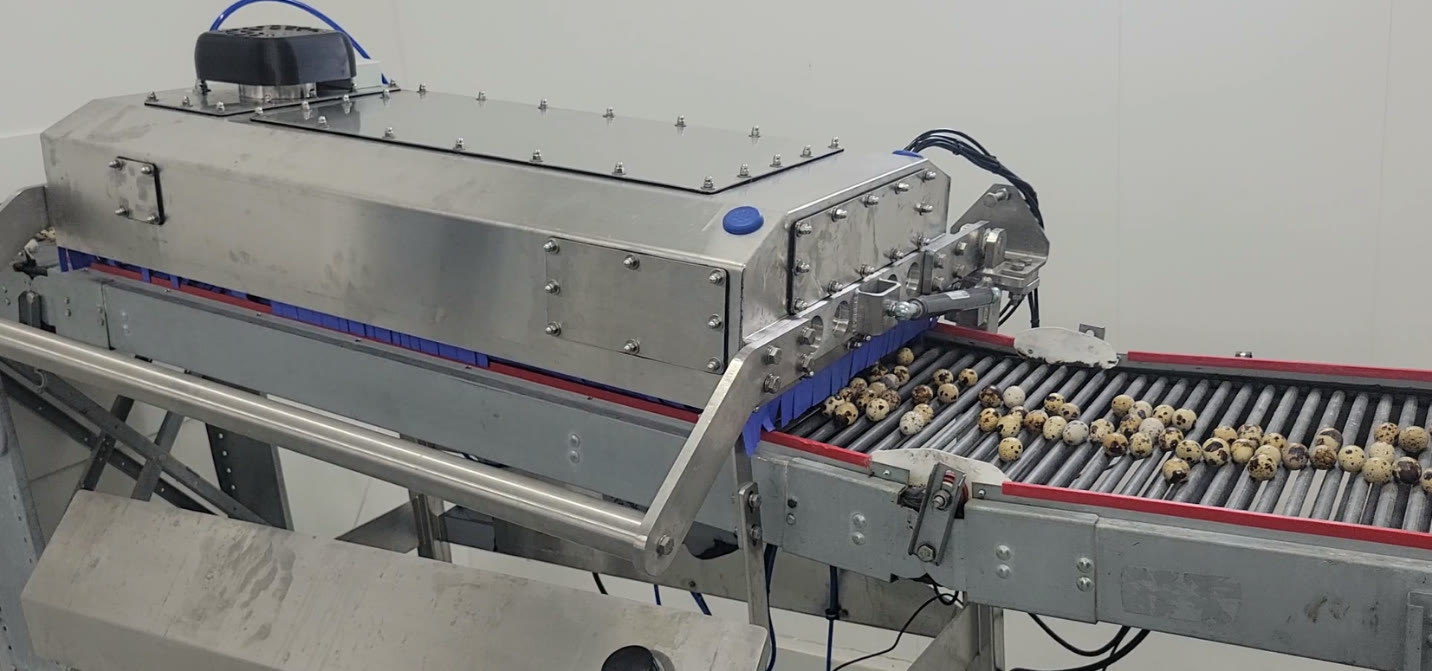
A gas-phase system like Clean Works treats eggs as they move along a roller conveyor through an enclosed chamber. UV-C light activates hydrogen peroxide and ozone to form hydroxyl radicals, which surround each egg and reach the whole shell before breaking down into water and oxygen. The eggs page shows how it fits on a grading and packing line.
Because nothing wets the egg, there's no wash water temperature to manage and no water to treat or dispose of at that step. In a third-party study, Salmonella on table eggs was reduced by more than 6.7 log, with no impact on the cuticle layer. Clean Works has also been tested on hatching eggs, with no impact on hatch rate.
Those two reductions come from different studies, so they aren't a head-to-head comparison. They do show that both a well-run wash and a waterless treatment can make a large reduction on the shell.
Limits
Salmonella Enteritidis can be inside an egg before it's laid. FDA describes the main route as transovarian: the bacteria infect the hen's ovaries and oviduct and reach the egg's interior while it's still forming. Washing, sanitizing and gas-phase treatment all work on the outside of the shell, so none of them reach that.
That's why flock programs, refrigeration and cooking still matter. A gas-phase step also isn't a cleaning step, so it won't remove dirt or stains from the shell.
Whether a waterless step can replace washing depends on the rules you work under. Eggs graded under the USDA shield still need to be washed to the 7 CFR 56.76 standard. The EU rules don't address gas-phase treatment directly, so check with your regulator before relying on it for Class A eggs.
Clean Works results
Third-party Salmonella result on table eggs from the Clean Works validation library. Results vary with the product surface, treatment conditions and how the product is presented.
Before you decide
FAQs
The two regions chose different ways to manage the same risk. The US requires eggs graded under the USDA shield to be washed and sanitized under strict temperature rules. The EU bans washing Class A eggs because washing can damage the cuticle, and allows it only in countries that were already washing in 2003.
Sources
Outside facts on this page were checked against these sources on . Clean Works figures come from our published validation results.
Talk to our team
Tell us about your eggs, your line and the markets you sell into. We'll send the egg results and an honest view of where a waterless step could fit alongside what you do today.