
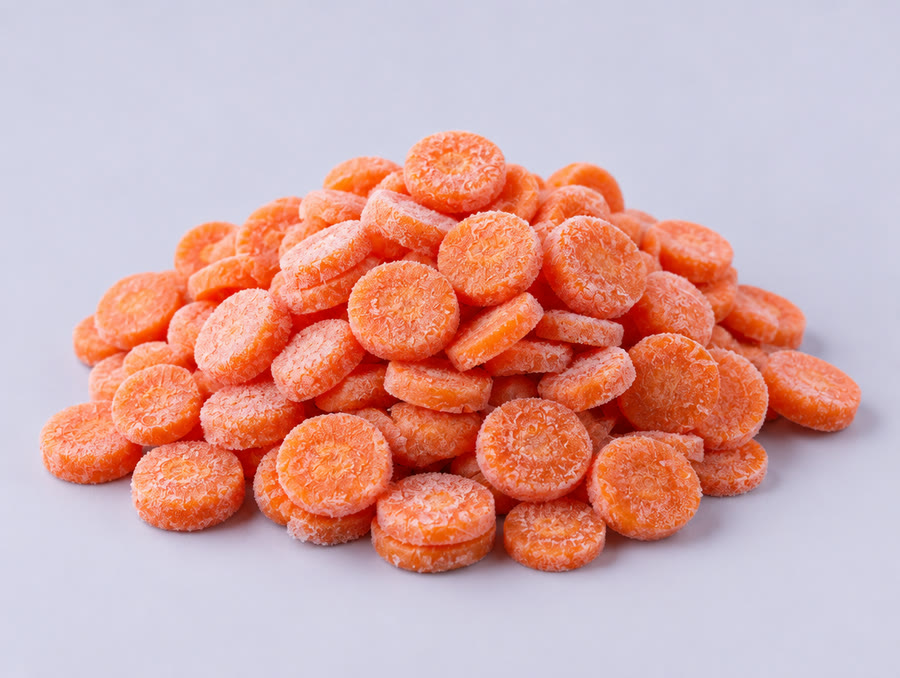
Carrots
- Product
- Frozen carrot slices
- Target
- Listeria
- Result
- 3.1 log reduction
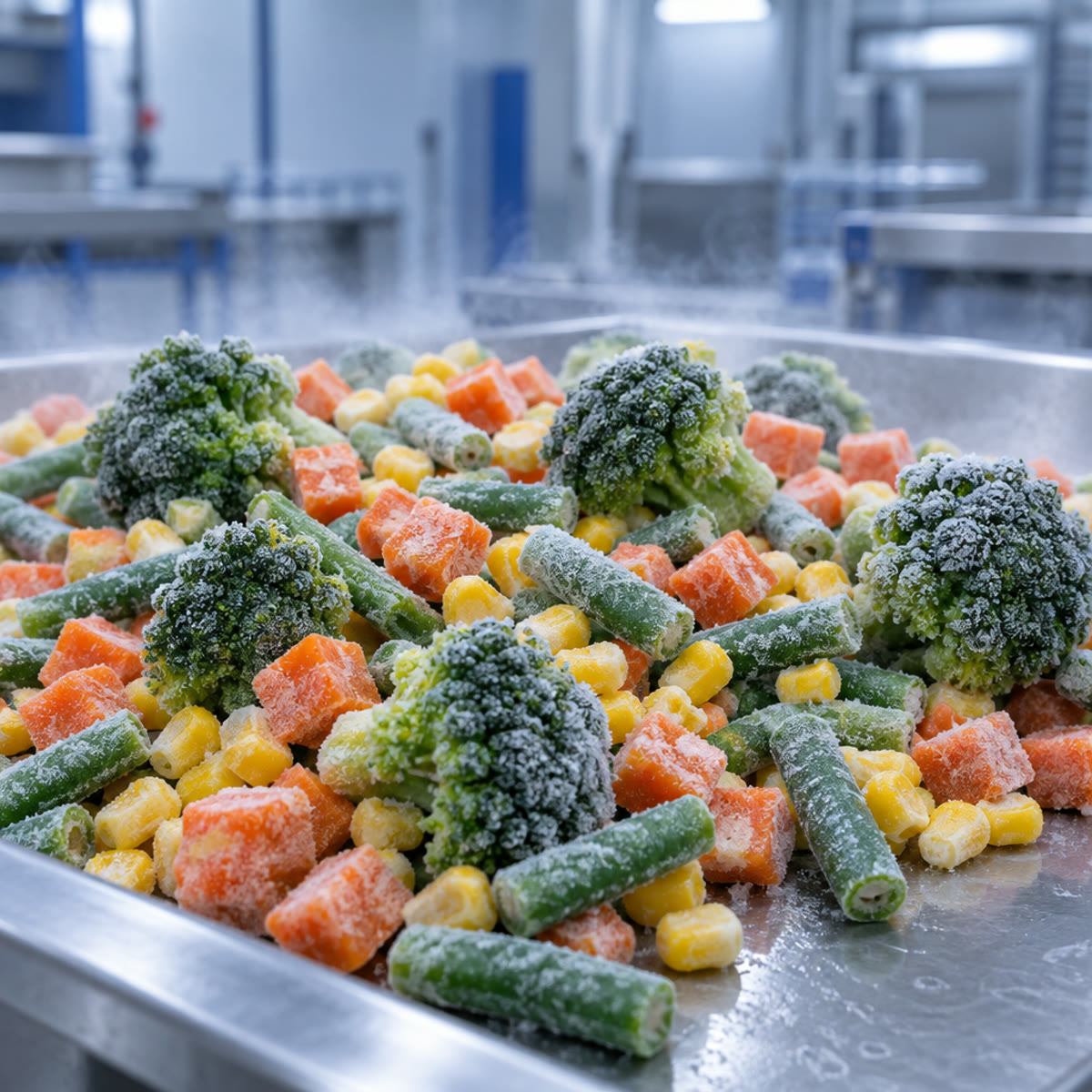
Frozen vegetable guide
Blanching kills Listeria. The problem is what happens after: cooling, conveyors, freezer tunnels and packing lines, where Listeria can settle in and survive for years, even with daily cleaning. Freezing doesn't kill it, and plenty of people eat frozen vegetables without cooking them. That's why the post-blanch environment is where control has to happen.
Step by step
| Blanching | Cooling and conveying | Freezer tunnel | Grading and packing | |
|---|---|---|---|---|
| What happens | Vegetables are heated briefly in hot water or steam. | Product is chilled, often in water, and carried on belts to the freezer. | Product is frozen individually on a moving belt or in a spiral. | Frozen product is sorted, sometimes ground or mixed, and filled into bags. |
| Listeria risk | Low. Blanching can cut Listeria by more than 5 log. | High. Cold, wet belts can carry Listeria back onto cooked product. | High. Tunnels are wet, hard to defrost fully and hard to clean once contaminated. | Moderate. Contaminated chutes, drains and fillers can reach product right before the bag. |
| What the outbreaks showed | In the EU outbreak, contamination was found after a 96°C blanch. | EFSA links contamination mainly to conveyor equipment after blanching. | In the US outbreak, positives included a freezer discharge chute and a conveyor arm. | In the EU outbreak, a floor drain near the filling machine tested positive. |
| What helps | Validated time and temperature. | Hygienic belt design, cleaning, and controlled water. | Scheduled full defrosts, sanitation and environmental monitoring. | Zoned sanitation and a final step on the frozen product before packing. |
The outbreaks
In 2016, CDC investigated the first known multistate listeriosis outbreak in the US linked to frozen vegetables. Nine people in four states got sick, all nine were hospitalized and three died, with illnesses going back to 2013. The recall expanded to roughly 358 consumer products sold under 42 brands, plus more than 100 other products that used the recalled ingredients.
Europe had a bigger one. Between 2015 and 2018, the same strain of Listeria monocytogenes made 47 people sick in five countries and nine died. It was traced to frozen corn and vegetable mixes from a freezing plant in Hungary, with matching strains in product from three production seasons. ECDC and EFSA concluded the strain was probably persisting in the plant's environment after standard cleaning and disinfection.
Both cases had the same pattern: a strain that lived in the plant for years and kept getting onto product that had already been blanched.
Post-blanch
EFSA's 2020 scientific opinion on frozen vegetables is clear about where the risk comes from. Blanching can reduce Listeria by more than 5 log, but blanching followed by cooling can actually increase how often it's found, mainly because of cross-contamination after the blanch. EFSA points to poor hygiene in the post-blanching environment, particularly conveyors and freezing tunnels.
The plant investigations back that up. In the US outbreak, positive food-contact swabs included a nylon strip in the tunnel discharge chute between the freezer and the packing room, and a metal arm on the conveyor next to it. In the Hungarian plant, the first positive came from a grinding step after a 96°C blanch.
A four-year study of a frozen vegetable plant in Poland found Listeria in 46% of frozen vegetable samples and 41% of environmental swabs. The same strains showed up before and after blanching, which the authors put down to heavy recontamination. Persistent strains were found even with daily cleaning and sanitizing.
Persistence
Freezing slows Listeria down, but it doesn't kill it. FDA says freezing won't eliminate it from food and can't be relied on as a control. Frozen plants also give it what it needs to persist:
The consumer
Frozen vegetables are usually sold as not ready to eat, with cooking instructions on the pack. People don't always follow them. In a 2025 CDC-led survey of more than 3,000 US adults, 8.7% said they had eaten frozen vegetables without cooking them, most often by adding them straight to a smoothie, and only about 60% said they follow package instructions.
That matters a lot. EFSA estimated that, per serving, the chance of illness from uncooked blanched frozen vegetables can be up to 3,600 times higher than from cooked ones for people aged 65 to 74. Its overall conclusion was that the public health impact depends mostly on how many servings are eaten uncooked.
The regulatory line follows the label. In the EU, Listeria criteria for ready-to-eat foods apply to food the producer intends to be eaten without cooking, and since July 2026 the stricter “not detected in 25 g” limit applies throughout shelf life to RTE foods that can support growth, unless the producer can show levels will stay at or below 100 cfu/g. In the US, FDA treats a food as ready to eat if it's reasonably foreseeable that it will be eaten without further processing.
Waterless gas-phase
EFSA recommends strong prerequisite programs for these plants: cleaning and disinfection of the processing environment, water control, time and temperature control, and clear consumer information. Those come first. A waterless gas-phase treatment can add a step on the product itself, after the freezer and before packing, without thawing it or adding water to a cold room. The frozen and IQF page explains how it fits.
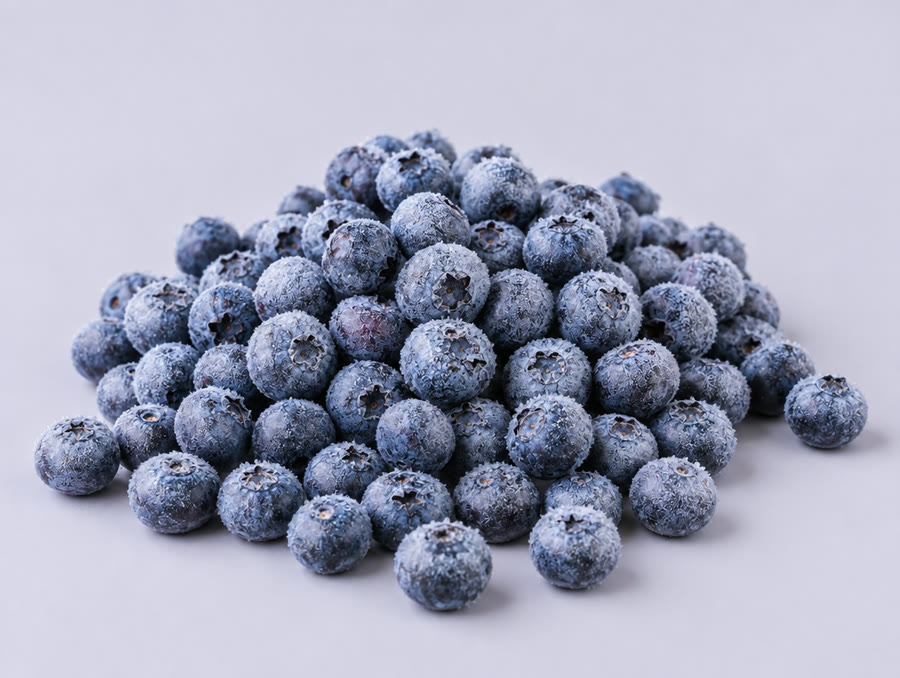
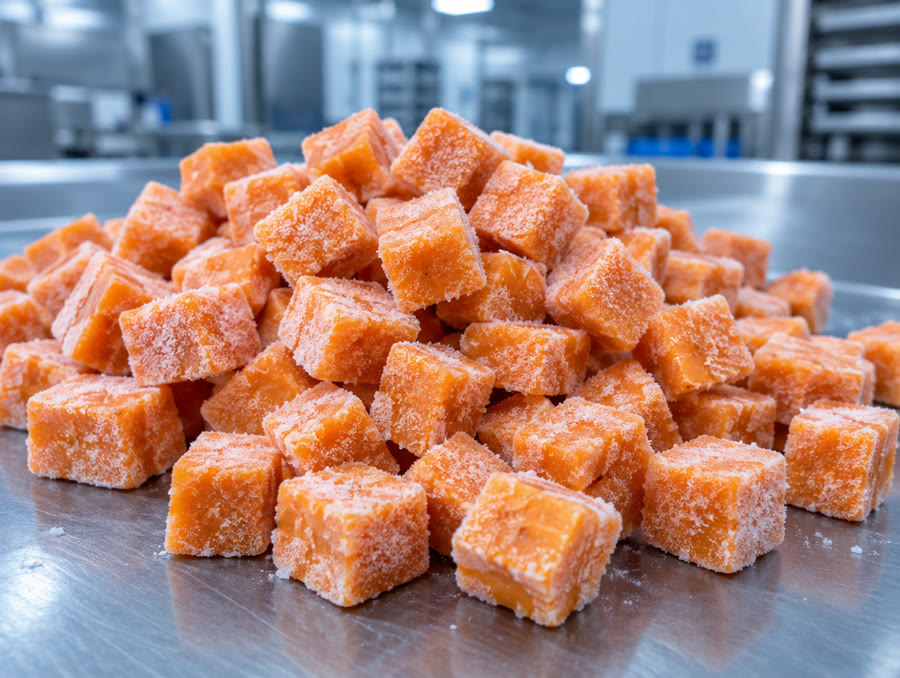
In Clean Works, UV-C light activates hydrogen peroxide and ozone to form hydroxyl radicals that surround each piece as it moves through the chamber. Treatment takes less than 30 seconds in many applications and breaks down into water and oxygen. In third-party testing on frozen product, Listeria was reduced by 3.1 log on frozen carrot slices, 2.33 log on frozen blueberries and 1.67 log on frozen diced sweet potato.
Those reductions are smaller than a blanch, and they vary with the product's shape and surface. A treatment step doesn't fix a contaminated tunnel or replace environmental monitoring. It adds another layer at the point where recontamination has done the most damage in past outbreaks.
Clean Works results
Third-party Listeria results on frozen and IQF products from the Clean Works validation library. Results vary with the product surface, treatment conditions and how the product is presented.
Before you decide
FAQs
Yes. Listeria doesn't grow at freezer temperatures, but freezing doesn't kill it either. FDA says freezing can't be relied on as a control, and Listeria can start growing again once product is thawed and kept in the fridge.
Sources
Outside facts on this page were checked against these sources on . Clean Works figures come from our published validation results.
Talk to our team
Tell us what you freeze, how your line runs from blancher to bag and where your monitoring has found Listeria. We'll send the frozen product results and an honest view of where a waterless step could help.